
Why caves are wet
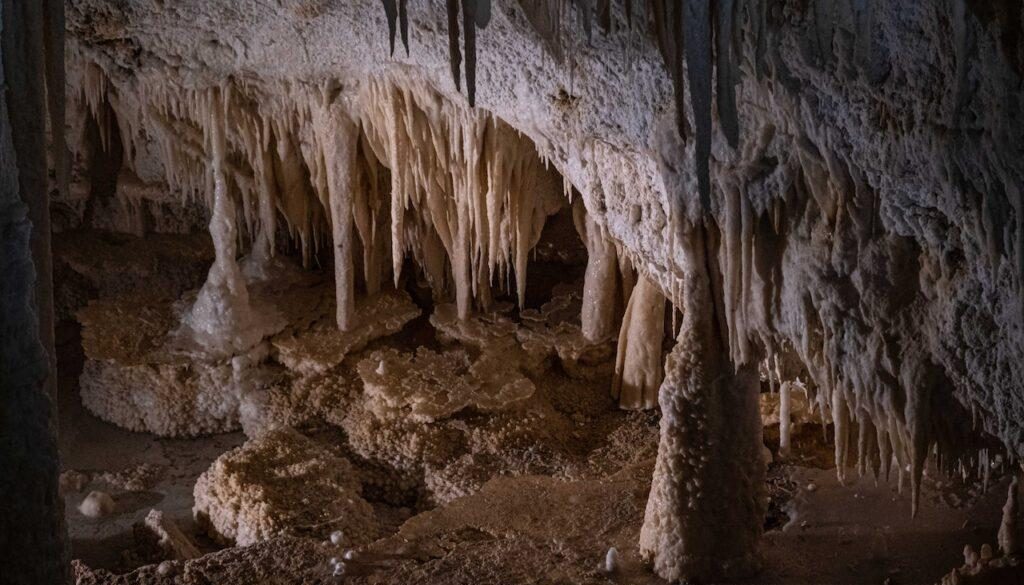
Caves are often wet due to a combination of factors. One of the main reasons is the presence of water seeping through the ground or dripping from the ceiling. This water comes from rainwater and groundwater that infiltrates into the cave system. As it travels through the rock formations, it picks up minerals and becomes slightly acidic, resulting in the formation of stalactites and stalagmites.
Another factor contributing to the wetness of caves is condensation. Caves are often cooler than their surroundings, causing moisture in the air to condense on cave walls and ceilings. This process is especially common in caves with high humidity levels.
In addition to water seepage and condensation, caves can also be influenced by underground rivers and springs. These sources of water can flow directly into a cave, creating wet conditions throughout.
The presence of moisture in caves creates a unique ecosystem. Many organisms have adapted to survive in these dark and damp environments, such as cave-dwelling animals and specialized cave-dwelling plants.
The wetness of caves also plays a role in their geological formation. Over time, water erodes the rock formations, creating intricate cave systems with unique features like underground rivers, chambers, and tunnels.
Understanding why caves are wet is important for both scientific research and recreational activities. Scientists study caves to learn about geological processes and the organisms that inhabit them. Cave explorers and adventurers must be aware of the wet conditions to ensure their safety and navigate these unique environments properly.
In conclusion, caves are wet due to various factors including water seepage, condensation, and underground rivers. The presence of water in caves creates a distinct ecosystem and contributes to their geological formation.


